Chamber vs Suction Vacuum Sealer: What's the Difference?
 Sean O'Connor
- 01 Nov 2026 23:42
- 129
Key Points
- Suction sealers suit solid foods and flexible bag lengths.
- Chamber sealers make chilled liquids easier to package, within the chamber's capacity.
- Compare bag costs, maintenance, and workspace alongside the purchase price.
Sealing a few steaks is straightforward. Add a splash of marinade, though, and the differences between vacuum sealers become much easier to appreciate. The way a machine removes air changes how comfortably it handles your food.
FoodSaver-style suction machines and chamber models can both earn their place at home. The better fit depends on what you pack, how often you do it, and how much counter space you can spare.
Chamber vs Suction Vacuum Sealer: Quick Comparison
| Suction Sealer | Chamber Sealer | |
| How it works | Pulls air through the bag opening | Removes air from the entire chamber |
| Best for | Everyday home food storage | Frequent sealing and liquid-rich foods |
| Liquids | More difficult | Much easier |
| Bag type | Usually textured/embossed bags | Usually smooth chamber pouches |
| Machine size | Generally compact | Larger and heavier |
| Upfront cost | Lower | Higher |
| Batch sealing | Good for normal household use | Better suited to frequent/high-volume use |
| Typical user | Most home kitchens | Serious meal prep, bulk processing, frequent sous vide |
The comparison is a starting point, rather than a promise about every model. Check the individual manual for liquid handling, permitted bags, and required breaks between cycles.
How a Suction Vacuum Sealer Works
A suction sealer keeps the food outside the machine. You place the open end of the bag into the sealing channel. The machine then pulls air out through that opening before heat-sealing the bag. It's a simple system and works particularly well with solid foods such as:
- Steaks and chops
- Chicken
- Cheese
- Nuts
- Dry pantry foods
- Frozen vegetables
- Sous vide portions
This is the style you'll commonly see from FoodSaver and other household vacuum-sealer brands. Because the food never has to fit inside a chamber, you're also less restricted by the dimensions of the machine. As long as the bag opening fits the sealing bar, you can potentially package fairly long or awkwardly shaped foods. For everyday freezer storage, that's often all you need.
How Suction Sealers Remove Air
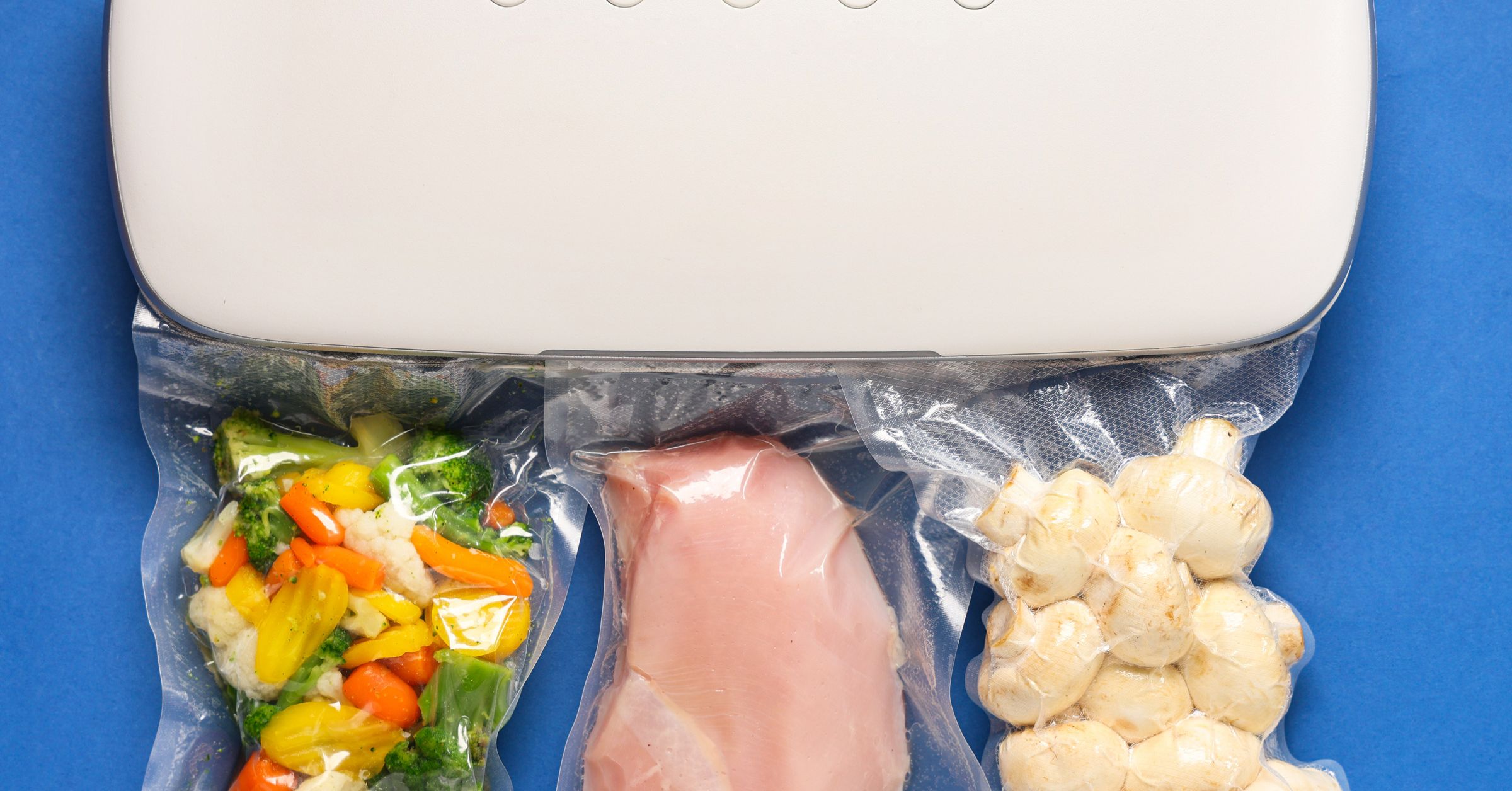
A suction machine holds the bag's open end while the food remains outside. It draws air out through the opening, then heat-seals the bag. Many household FoodSaver machines use this approach, although FoodSaver is a brand rather than the name of the technology.
For firm foods such as meat portions, nuts, or hard cheese, the process can be quick and familiar. Since most of the bag stays outside, package length is relatively flexible. The opening still needs to fit the seal bar, and the bag needs proper support.
Where Moisture Changes the Job
As air moves toward the opening, juices can travel with it. Liquid in the sealing area can interfere with the seam or enter the machine. That's why a bag of marinated meat needs more care than a handful of dry nuts.
Moist settings and pulse controls may help with suitable foods, but they don't turn every suction sealer into a soup-packing machine. Follow the model's instructions or freeze liquid portions solid before sealing. Keeping the bag opening clean remains essential.
How Chamber Sealers Handle Liquids
A chamber machine lowers pressure around the bag as well as inside it, then seals the opening before restoring normal pressure. Liquid is less likely to be pulled straight toward the seal, which makes suitable chamber models useful for chilled soup and sauces.
Temperature and fill level still matter. Warm liquids can boil under reduced pressure, and an overfilled pouch can spill. Chill food appropriately, leave the headspace specified in the manual, and keep the opening above the liquid while arranging the bag.
Compare Pouches and Package Size
Bag choice is another practical difference. External suction sealers typically need textured bags with channels that help pull air out, while chamber machines commonly work with smooth pouches. Those pouches can cost less, which starts to matter if you vacuum seal food often.
But cheaper bags aren't much help if the food won't fit inside the chamber. Before choosing a machine, compare both the ongoing bag cost and the usable chamber size. Large cuts that slip easily into an external bag may be awkward or simply too big for a compact chamber.
Which Is Better for Bulk Food?
It depends on what “bulk” means in your kitchen. If you come home from the warehouse store once a month with several family packs of chicken and steak, a good suction sealer can handle the job perfectly well.
If you're regularly processing large quantities of meat, fish, meal-prep portions, or other foods, a chamber machine starts to make more sense. Chamber sealers are built around repeatable cycles, and the lower cost of smooth pouches can become meaningful when you're going through bags constantly.
This is why the decision isn't simply: Home = suction. Professional = chamber. A home cook who hunts, fishes, buys meat in serious bulk, or prepares large batches may get plenty of value from a chamber sealer. Meanwhile, someone who seals five bags a month probably won't.
What About Sous Vide?
Either design can package suitable food for sous vide when you use bags approved for the intended cooking temperature and duration. An immersion circulator alone doesn't create a need for a chamber sealer. Ordinary solid portions may be perfectly manageable with a suction machine.
A chamber model becomes more appealing when your preparation regularly includes liquids or large batches. Choose around those habits, while following a validated cooking method and safe chilling practices. A tightly sealed bag doesn't make an unsuitable time and temperature safe.
The Size Difference Is Hard to Ignore
A suction sealer can be slim enough to store in a cabinet and pull out when needed. A chamber sealer is a different commitment. The vacuum chamber, pump, and heavier construction make these machines considerably bulkier.
Depending on the model, you may prefer to give it a permanent place on the counter rather than move it in and out of storage. Before buying one, check both the exterior dimensions and the usable chamber dimensions. A chamber machine may be impressive, but it isn't much fun if you don't have anywhere convenient to put it.
Choose the Fit, Then the Features
A suction sealer makes sense when you want quick, everyday freezer prep without giving up much counter space. A chamber model becomes more worthwhile when liquids, large batches, and frequent sealing are part of your routine.
The better choice isn't simply the more capable machine. It's the one that makes the kind of vacuum sealing you actually do feel easier.
By, Sean O'ConnorSean O'Connor is the lead writer at Batter Blaster, where he combines a lifelong passion for food with sharp research skills to bring readers the best in cooking tips, kitchen gear guides, and food insights. With a background in culinary journalism and a love for simplifying home cooking, Peter focuses on practical, approachable advice that helps real people cook with confidence.