How Much Oil Do You Need to Fry a Turkey?
 Sean O'Connor
- 22 Sep 2026 09:50
- 8
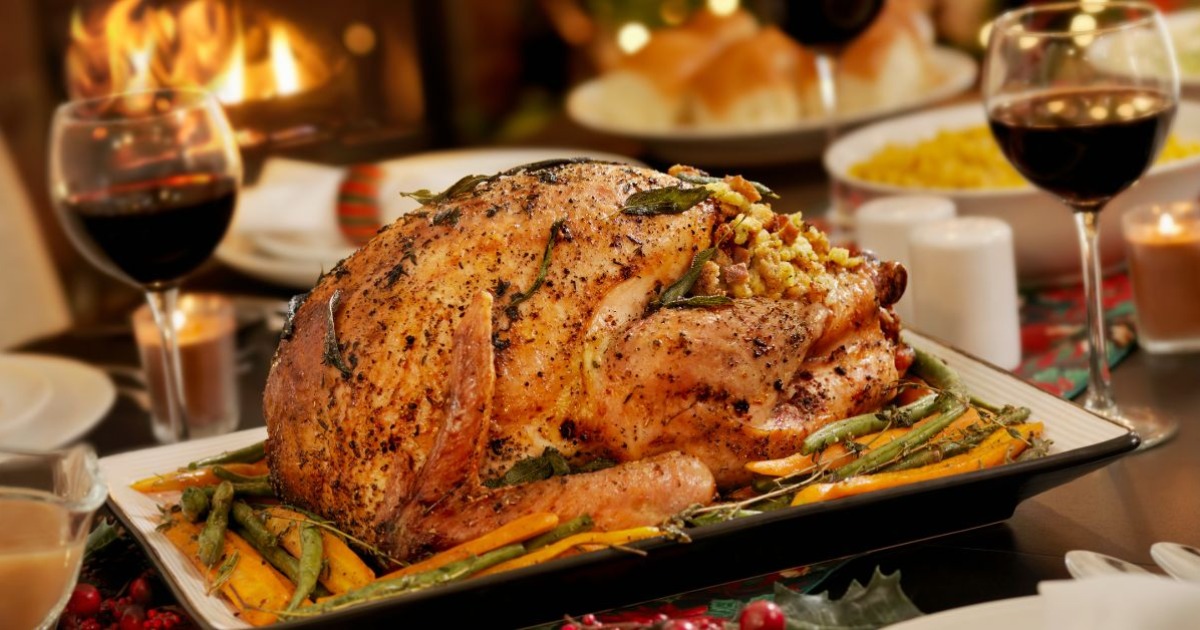
There’s no single amount of oil that works for every turkey fryer. Butterball lists 3 gallons for a 10- to 12-pound turkey in one recipe, but that doesn’t mean your pot needs exactly the same amount. A wider pot leaves more space around the bird, while a narrower one brings the oil higher with less.
So before you pick up another jug of oil, check what your setup actually needs. A cold-water test with your turkey and pot gives you a fill level to follow. Then use the chart below to turn that measurement into gallons for your shopping list.
Start With the Fryer, Not Just the Turkey’s Weight
It would be convenient if every 12-pound turkey needed the same number of gallons. But a wide pot leaves more room around the bird than a narrow one, and the basket or rack takes up space too. Weight alone cannot tell you where the liquid will sit.
For a manufacturer-specific reference, the Bayou Classic manual covering stockpot models 2625, 3025, and 1118 gives a typical range of 3 to 3.5 gallons, with 3.5 gallons as the maximum for those vessels. That limit belongs to those models; it is not a universal turkey-fryer allowance.
Check your own manual for the permitted turkey size, oil limit, and measuring procedure. A pot marked “30 quarts” describes its capacity, not permission to pour in 30 quarts of frying oil. The turkey still needs room, and hot oil needs space to rise and bubble.
Oil Amount Chart: Turn Your Water Test Into a Shopping List
Once you have measured the water left after removing the turkey, use the chart below to convert that volume into oil. These are unit conversions, not estimates by turkey weight or instructions to fill every fryer to one of these amounts.
| Water left after test | Oil in US gallons | Oil in liters |
| 8 quarts | 2 gallons | 7.6 L |
| 10 quarts | 2.5 gallons | 9.5 L |
| 12 quarts | 3 gallons | 11.4 L |
| 14 quarts | 3.5 gallons | 13.2 L |
| 16 quarts | 4 gallons | 15.1 L |
All quantities use US liquid measures. Liters are rounded. Only use a measured amount that also meets your fryer’s fill limit and required clearance. The chart does not override the manual.
For example, if your test leaves 10 quarts of water, you need 2.5 gallons of oil. Buying three 1-gallon jugs covers that amount, but the remaining half gallon stays in the jug. There is no reason to add it just because you bought it.
How Much Oil Does Your Setup Need? Do the Water Test
Think of this as a rehearsal with a cold pot. You are finding the space the turkey leaves behind, so use the same bird, pot, and cooking rack or basket you will use for frying. Follow your model’s measuring instructions if they differ from the general process below.
1. Get the turkey and empty pot ready
Keep the burner off throughout the test. The turkey must be fully thawed, with packaging, neck, and giblets removed. Put it on the intended rack or in the basket, then lower it into the empty, cold pot. Do this before applying a dry seasoning rub.
2. Add water to the level your manual requires
Add cool water gradually. Butterball’s outdoor-fryer method says to barely cover the top of the bird. Your equipment instructions may specify a different level, so check them rather than adding an extra inch or two by eye.
Watch the space below the rim as well as the water around the turkey. If the bird cannot fit with the required clearance and within the permitted limits, stop. Use a smaller turkey or an appropriately sized fryer. A tight squeeze is not something to fix once the oil is hot.
3. Lift out the turkey, then record the lower level
Remove the turkey carefully and let water drain from the cavity and basket back into the pot. The level will fall. That lower level, with the turkey removed, is the one to record for adding oil.
Mark or measure it using the method your manual recommends. To work out the purchase quantity, measure the remaining water with a graduated container. Record the total in quarts or liters before emptying the pot.
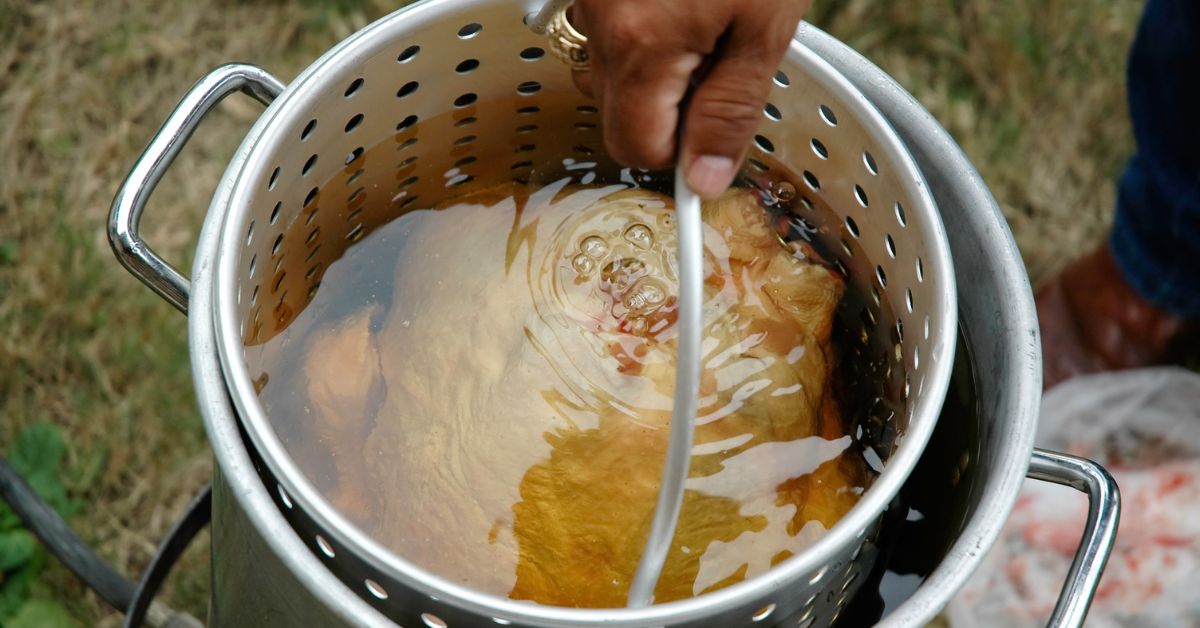
4. Empty the water and dry everything
Drain the pot completely and dry it, the rack or basket, and the turkey thoroughly, including the cavity. Never pour oil on top of the test water. Even a small amount of trapped moisture can cause hot oil to spit.
Treat the test water and measuring tools as having touched raw poultry. Clean and sanitize the affected equipment and surfaces. Keep the turkey refrigerated if you are not proceeding promptly with preparation; the test is not a reason to leave it sitting out.
5. Add the measured oil before heating
With the pot dry and the heat still off, add oil to the recorded level, staying within the manufacturer’s limit. Recheck the measurement now, while adjustments are straightforward. The water test is finished before heating starts; never add water to hot oil.
Three Easy Ways to Get the Amount Wrong
Marking the level while the turkey is still inside
This is the mix-up to avoid. The bird pushes liquid upward during the test. If you remove it and then fill the empty pot with oil to that higher mark, you have added oil where the turkey needs to go. Record the lower level after removal.
Assuming a larger bird needs more oil
A bigger turkey occupies more space in the pot, so the amount of oil does not rise neatly with its weight. Nor does that mean you can squeeze an oversized bird into your fryer. Check its size limit and repeat the measurement whenever the bird or equipment changes.
Using an outdoor-pot measurement for an electric fryer
Electric turkey fryers can have their own fill lines and cooking arrangements. Butterball notes that a turkey in an electric fryer may not be completely immersed. Do not top up past the approved line just to hide the breast under oil. Follow the instructions for that appliance.
Before You Light the Burner
Getting the quantity right is only one part of the setup. Use an outdoor propane fryer on a stable, noncombustible surface, away from buildings and overhead cover. The U.S. Fire Administration specifies at least 10 feet from the home; follow any greater distance required by your manufacturer. Keep children and pets away.
Have a suitable oil thermometer in place and stay with the fryer during heating and cooking. For lowering the turkey into an outdoor propane fryer, Butterball advises turning the burner off first and lowering the bird slowly. Follow the equipment’s relighting instructions once it is safely in place. Never use water on an oil fire.
Measure Once, Then Get Back to Dinner
The answer to how much oil you need becomes much simpler when you measure your own setup. Check the manual, do the cold-water test, and buy enough to match the result. When it is time to fry, you will have a clear fill level to follow and one less thing to figure out while everyone is asking when dinner will be ready.
By, Sean O'ConnorSean O'Connor is the lead writer at Batter Blaster, where he combines a lifelong passion for food with sharp research skills to bring readers the best in cooking tips, kitchen gear guides, and food insights. With a background in culinary journalism and a love for simplifying home cooking, Peter focuses on practical, approachable advice that helps real people cook with confidence.