Instant-Read vs Leave-In vs Wireless: Which Meat Thermometer?
 Sean O'Connor
- 28 Oct 2026 11:05
- 7
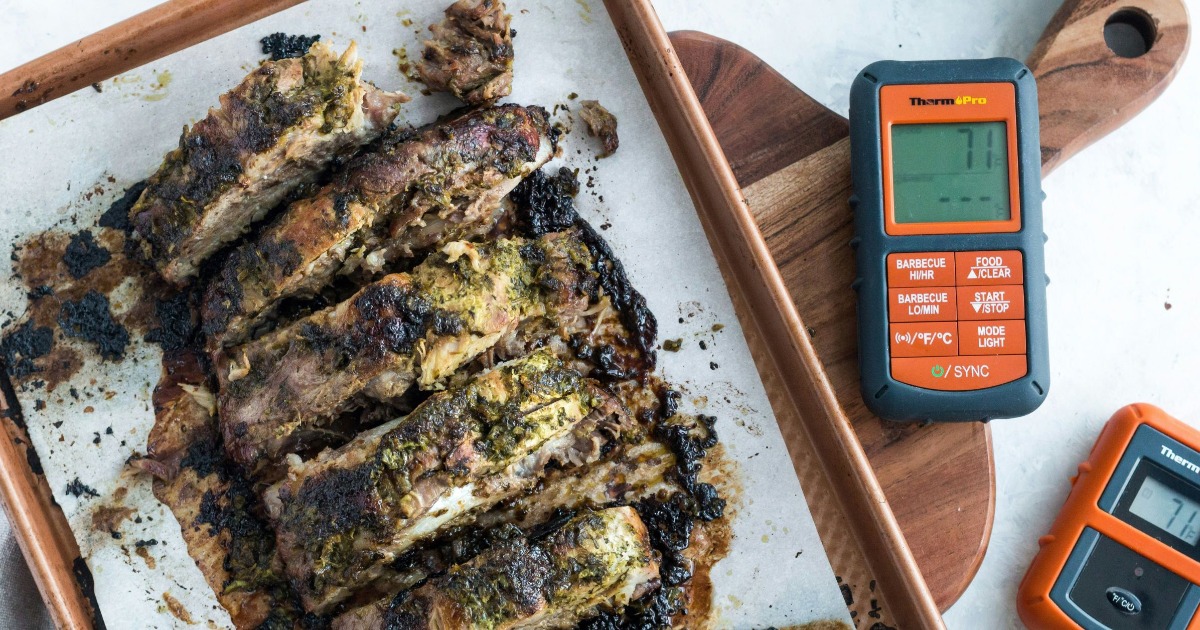
Some meat thermometers give you an answer in seconds. Others stay in the food for the entire cook. And newer wireless models can send temperature updates to your phone while you're somewhere else entirely.
They all measure temperature, but they solve different cooking problems.
An instant-read thermometer is best for quick checks. A leave-in thermometer tracks food as it cooks. A wireless thermometer does the same job without keeping you tied to the oven or grill.
The right one depends less on what looks most advanced and more on how you actually cook.
Instant-Read vs Leave-In vs Wireless at a Glance
| Instant-Read | Leave-In | Wireless | |
| How it's used | Insert, read, remove | Stays in food while cooking | Stays in food and transmits readings |
| Best for | Quick temperature checks | Roasts and long oven cooks | Grilling, smoking, long cooks |
| Monitor continuously | No | Yes | Yes |
| Remote monitoring | No | Usually no | Yes |
| Main advantage | Fast and versatile | Easy continuous monitoring | Freedom to move away from cooker |
The real question is whether you want to check the temperature now or follow it as the food cooks.
Instant-Read: The Thermometer You'll Reach for Most Often
An instant-read thermometer is the simplest of the three.
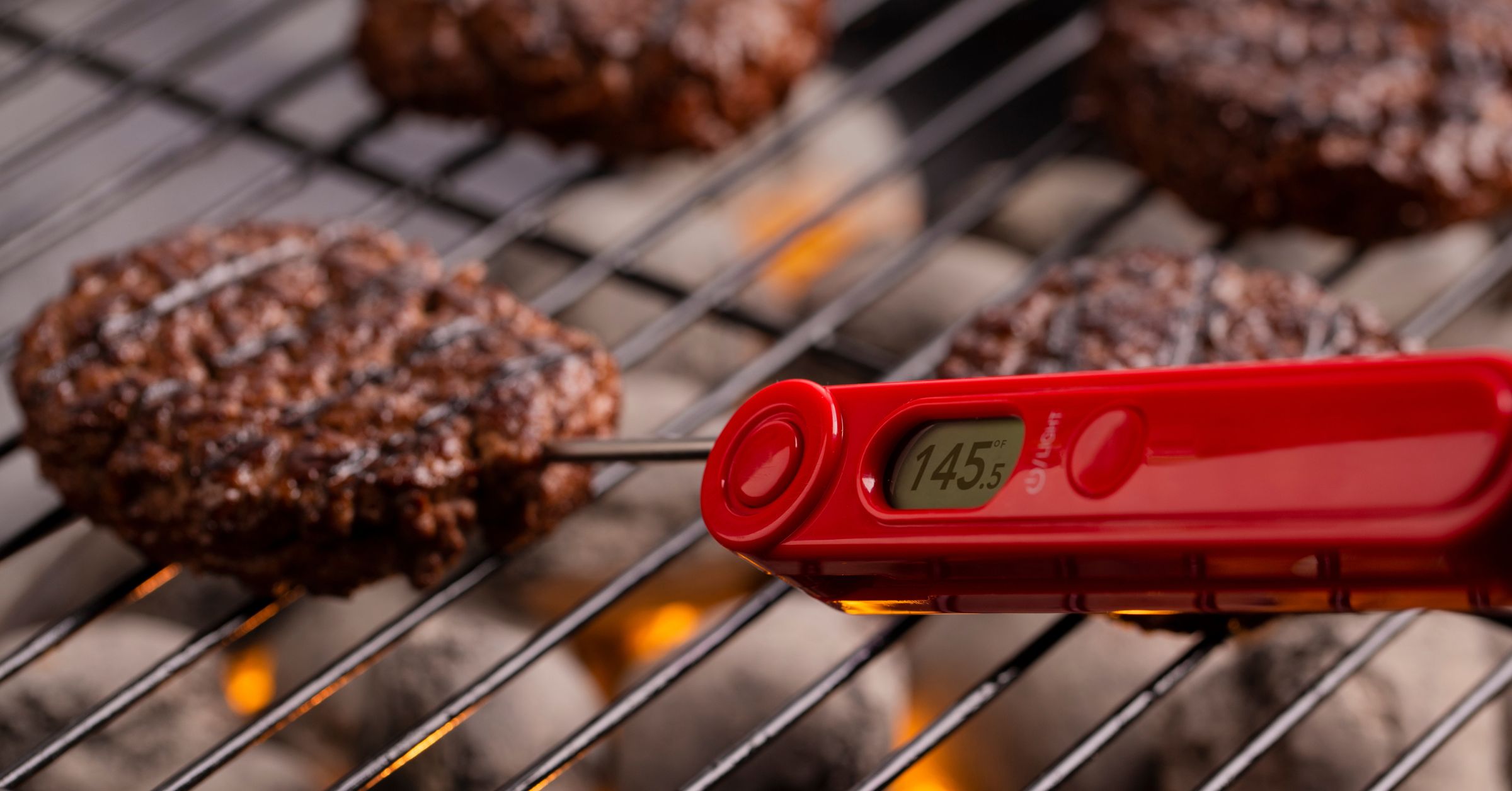
Insert the probe into the food, wait for the reading, then remove it. You're not committing the thermometer to one piece of meat for the entire cooking session. That makes it useful for almost anything: steaks, burgers, chicken breasts, pork chops, fish, casseroles, or even a Thanksgiving turkey.
It's especially handy when you're cooking several pieces at once. You can check one chicken thigh, move to another, then test a third in less than a minute.
There's another advantage that's easy to overlook: you control exactly where you're measuring.
If a large roast seems unevenly cooked, you can check several areas instead of relying on one probe position.
The limitation is equally simple. An instant-read thermometer doesn't watch the food for you. Every reading requires you to return to the oven, grill, or pan and check it yourself.
And unless the manufacturer specifically says otherwise, it shouldn't be left in the oven while the food cooks.
Leave-In: Better When You Want to Watch the Temperature Rise
A leave-in thermometer changes the experience.
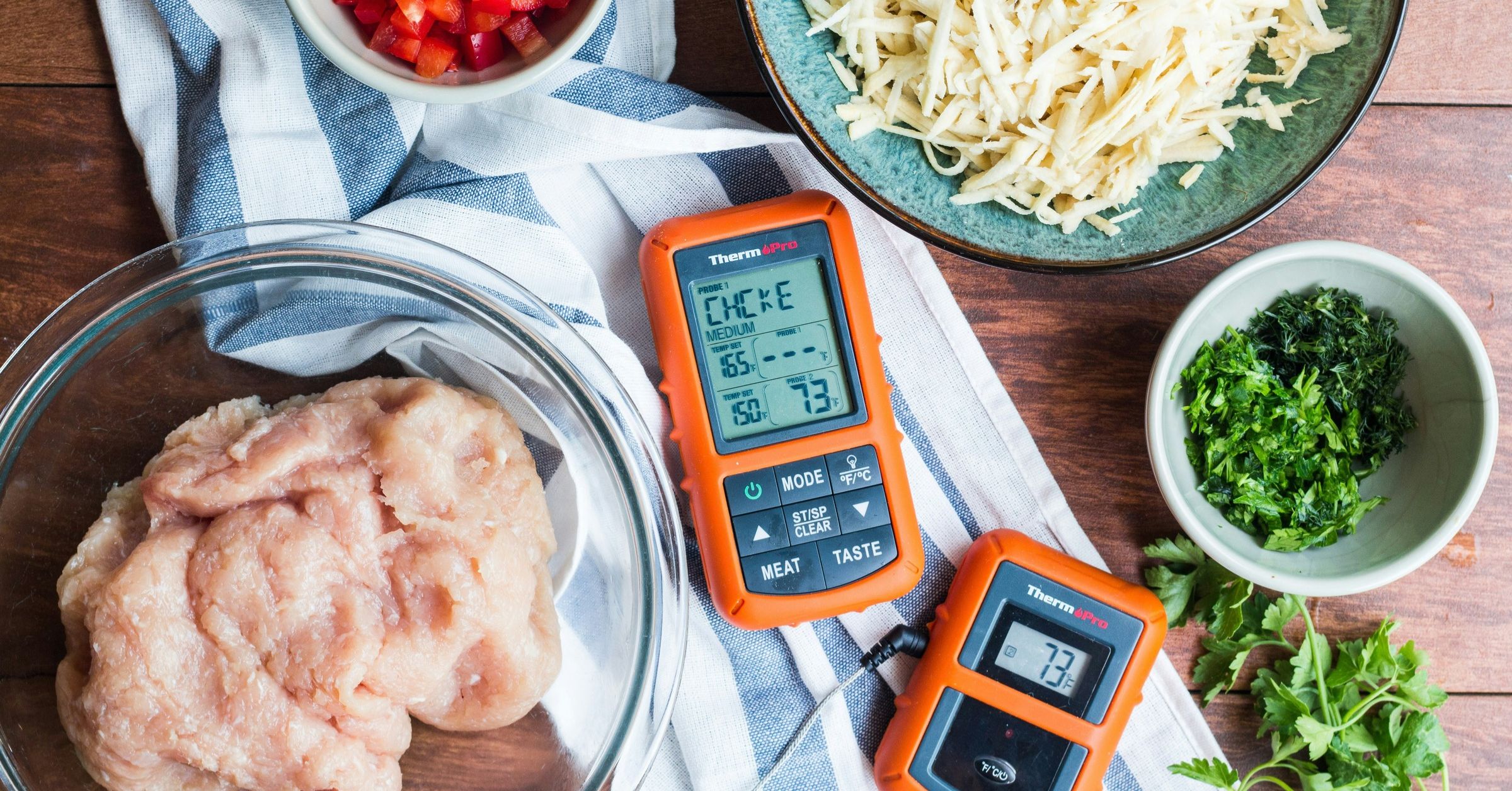
Instead of repeatedly checking the meat, you position the probe before or during cooking and leave it there. On a typical wired digital model, the probe remains inside the food while a heat-resistant cable connects it to a display outside the oven.
Now you can see the internal temperature without opening the oven door.
That makes leave-in thermometers particularly useful for foods that take a while:
- Whole turkey
- Roast chicken
- Pork loin
- Prime rib
- Large beef roasts
Many models also let you set a target temperature and sound an alarm when the food gets close.
For a two-hour roast, that's far more useful than checking every 15 minutes because you're worried you've missed the right moment.
Wireless: Leave-In Monitoring Without the Cable
A wireless meat thermometer follows the same basic idea as a leave-in probe, but removes the physical connection to an external display.
The probe stays in the meat and sends temperature information wirelessly to a receiver, base station, or phone.
That becomes especially useful when the cooking itself doesn't need much attention.
Put a brisket in the smoker, for example, and you may be cooking for hours. There's little benefit in standing next to the smoker just to watch a thermometer. With a wireless model, you can keep an eye on the temperature while doing something else.
Some models can track more than the internal temperature of the meat. They may also monitor the temperature around the food, estimate remaining cooking time, or send alerts as the meat approaches your target.
For long smoking and grilling sessions, that convenience can be a major upgrade.
So Why Not Just Buy Wireless?
Because more features don't automatically make a thermometer better for every job.
Imagine you're cooking four steaks. You don't need to monitor one steak continuously from your phone. You need to quickly check several steaks and pull each one when it's ready.
An instant-read thermometer is much better suited to that job.
Now imagine you're roasting a 15-pound turkey. You're mostly interested in how the temperature changes over the next few hours. A leave-in probe becomes much more useful.
And if you're smoking a pork shoulder outside for most of the day, remote monitoring starts to earn its keep. The best thermometer is the one that removes work from the type of cooking you actually do.
Accuracy Matters More Than Features
Whether a thermometer costs $20 or connects to your phone, its basic job hasn't changed: it needs to tell you the temperature of your food accurately.
Features such as apps, graphs, estimated finish times, multiple probes, and custom alerts can make cooking easier, but they can't compensate for poor measurements.
Probe placement matters too.
For most cuts of meat, measure in the thickest portion and avoid touching bone, the pan, or large pockets of fat unless the cooking instructions specify another location.
For whole poultry, USDA recommends a minimum internal temperature of 165°F, checked in the thickest part of the breast and the innermost portions of the thigh and wing.
This is also why owning an instant-read thermometer can still be useful even if you already have a leave-in or wireless model. A second thermometer lets you verify temperatures in other parts of a large piece of meat before serving.
Which Meat Thermometer Should You Buy?
Start with what you cook most often.
If you make steaks, burgers, chicken pieces, fish, and everyday dinners, start with an instant-read thermometer. It's quick, flexible, and useful across more individual cooking tasks.
If you frequently cook whole poultry or large roasts in the oven, a leave-in thermometer saves you from repeatedly opening the oven and checking the food.
If you're into smoking, barbecue, or long grilling sessions, a wireless thermometer gives you the biggest convenience advantage because you can monitor the cook from a distance.
And you don't necessarily have to choose only one.
For someone who cooks meat regularly, a particularly useful combination is a leave-in or wireless thermometer for monitoring, plus an instant-read thermometer for final checks.
The Bottom Line
Think about the job rather than the technology.
Instant-read thermometers check. Leave-in thermometers monitor. Wireless thermometers let you monitor from farther away.
For everyday cooking, instant-read is the most versatile place to start. For long roasts, leave-in monitoring is more convenient. And for smokers or grills where you don't want to stay nearby for hours, wireless earns its advantage.
The fanciest thermometer isn't automatically the right one. The best choice is the one that fits the way you cook.
By, Sean O'ConnorSean O'Connor is the lead writer at Batter Blaster, where he combines a lifelong passion for food with sharp research skills to bring readers the best in cooking tips, kitchen gear guides, and food insights. With a background in culinary journalism and a love for simplifying home cooking, Peter focuses on practical, approachable advice that helps real people cook with confidence.