Meat Thermometer Not Accurate? How to Calibrate It
 Sean O'Connor
- 03 Nov 2026 10:37
- 5
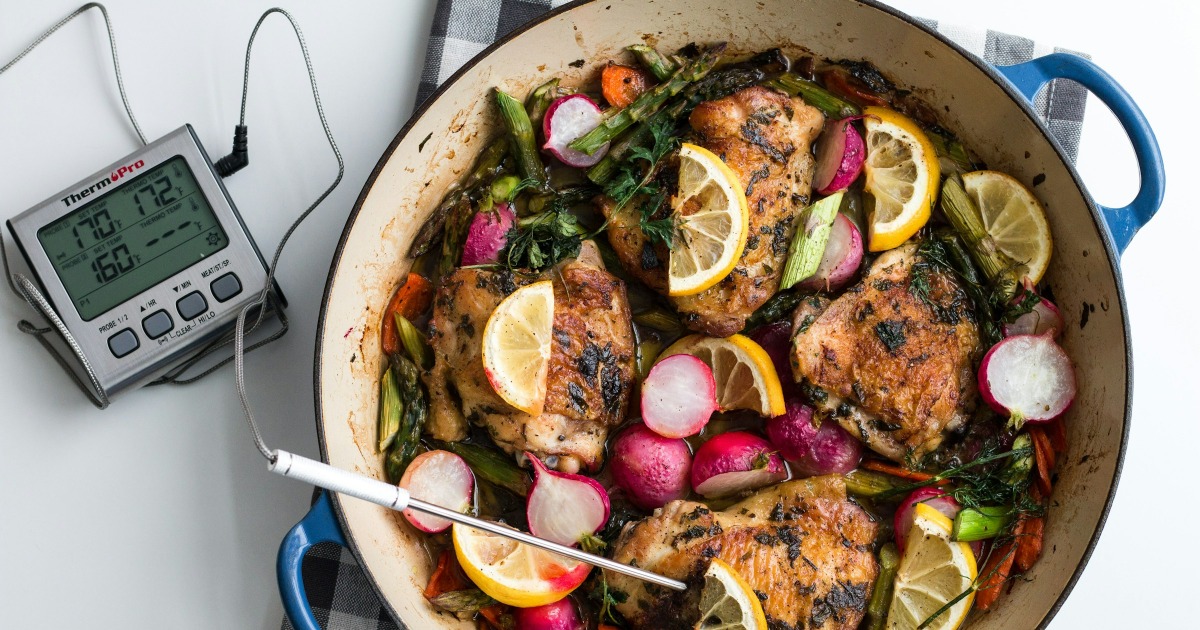
Your chicken is clearly cooked, but the thermometer says otherwise. Or two thermometers pushed into the same roast are giving you completely different numbers.
Before you blame dinner, check the thermometer.
A meat thermometer can drift out of calibration over time, especially after being dropped, exposed to extreme heat, or used frequently. But an odd reading doesn't automatically mean it's broken.
A simple glass of ice water can tell you a lot.
First, Make Sure You're Taking the Temperature Correctly
Before calibrating anything, take one more reading.
Insert the sensing area of the probe into the thickest part of the meat and keep it away from bone, large pockets of fat, the pan, or the grill grate.
Then give the thermometer enough time to settle.
This matters because a thermometer can appear inaccurate when the real problem is where or how you're measuring.
If you're checking a large roast or whole bird, try several locations. Different parts of the food can genuinely be at different temperatures.
Still getting readings that don't make sense?
Now it's worth testing the thermometer itself.
The Ice-Water Test: The Easiest Way to Check a Meat Thermometer
Ice water gives you a known reference point.
When prepared correctly, an ice-water mixture should be approximately 32°F (0°C). If your thermometer reads significantly above or below that, it may need calibration.
Here's how to test it.
1. Fill a Glass With Ice
Use plenty of ice rather than dropping a few cubes into a glass of water.
Fill the glass almost to the top.
2. Add Cold Water
Pour cold water into the spaces between the ice.
You want a thick mixture of ice and water, not a glass of cold water with a few pieces of ice floating on top.
Stir it and let the mixture sit briefly so the temperature can stabilize.
3. Insert the Thermometer
Place the sensing area of the probe in the middle of the ice water.
Don't let it touch the bottom or sides of the glass. You want to measure the water mixture, not the container.
4. Wait for the Reading to Settle
Give the thermometer the amount of time specified by its manufacturer.
A properly calibrated thermometer should read around 32°F (0°C).
If it does, you're good to go.
If it doesn't, the next step depends on the thermometer you own.
How to Calibrate a Meat Thermometer
Not every meat thermometer can be adjusted.
That's the first thing to know.
Dial Thermometers
Many traditional dial thermometers have a calibration nut underneath the dial.
While the probe remains in the ice water, hold the nut with a small wrench and carefully turn the dial until it reads 32°F.
The exact adjustment method can vary, so follow the manufacturer's instructions for your thermometer.
Digital Thermometers
Digital models are less predictable.
Some have a calibration function that lets you correct the reading using buttons or a settings menu. Others are calibrated at the factory and can't be manually adjusted at all.
If yours can't be calibrated, you still have options.
Some manufacturers recommend accounting for a known offset, while others advise replacing the thermometer if it falls outside their stated accuracy tolerance.
Check the manual before trying to physically adjust anything.
Can You Use Boiling Water Instead?
Yes, boiling water provides another useful reference point, but there's a catch.
Water boils at approximately 212°F (100°C) at sea level, but its boiling point decreases as elevation increases. Local atmospheric conditions can affect it too.
That means 212°F isn't a universal calibration target everywhere.
If you use this method, determine the expected boiling point for your elevation and compare the thermometer against that value.
Then insert the probe into the boiling water without touching the bottom or sides of the pot.
There's another practical reason the ice-water method is usually easier: boiling water can burn you.
Unless you specifically want to test thermometer performance at a high temperature, an ice bath is a simpler place to start.
What If Your Thermometer Is Off by a Few Degrees?
Don't immediately assume it needs to go in the trash.
First check the manufacturer's accuracy specification.
A thermometer isn't necessarily designed to display the exact reference temperature down to a fraction of a degree. Consumer thermometers have stated accuracy ranges, and those ranges vary by model.
For example, if the manufacturer specifies accuracy within ±1°F and your ice test reads 33°F, the thermometer may still be performing exactly as designed.
If the reading falls outside the manufacturer's tolerance, calibrate it if the model allows.
If it can't be adjusted, check the manufacturer's troubleshooting instructions before deciding whether to continue using or replace it.
When Should You Check Calibration?
You don't need to perform an ice test every time you cook dinner.
But it's worth checking when:
- The readings suddenly seem unrealistic
- The thermometer has been dropped
- It has been exposed to temperatures beyond its rating
- Two trusted thermometers disagree significantly
- You haven't checked it in a long time
For someone who relies heavily on a thermometer for grilling, smoking, or cooking large cuts of meat, occasional accuracy checks are a useful habit.
It takes only a few minutes and removes a lot of uncertainty.
When Is It Time to Replace the Thermometer?
Calibration can correct an inaccurate reading. It can't fix physical damage.
Consider replacing the thermometer if the probe is bent or damaged, the display behaves erratically, the unit repeatedly loses calibration, or readings remain unreliable after you've followed the manufacturer's troubleshooting process.
A damaged probe or failing electronics aren't something you want to compensate for every time you cook.
And if an inexpensive thermometer is consistently several degrees off and can't be recalibrated, replacing it may be more sensible than trying to remember an adjustment every time you check dinner.
The Bottom Line
If your meat thermometer suddenly seems wrong, don't replace it based on one strange reading.
Check your technique first, then test the thermometer in a properly prepared ice bath. It should read around 32°F (0°C), within the accuracy tolerance specified for your model.
If it's outside that range, calibrate it if the manufacturer allows. If the thermometer can't be adjusted and continues giving unreliable readings, that's when replacement starts to make more sense.
By, Sean O'ConnorSean O'Connor is the lead writer at Batter Blaster, where he combines a lifelong passion for food with sharp research skills to bring readers the best in cooking tips, kitchen gear guides, and food insights. With a background in culinary journalism and a love for simplifying home cooking, Peter focuses on practical, approachable advice that helps real people cook with confidence.