Turkey Internal Temp Chart: Where to Insert the Thermometer
 Sean O'Connor
- 23 Sep 2026 09:38
- 10
Your turkey looks ready, but the thermometer gives you a different number every time you move it. That does not necessarily mean the thermometer is wrong. Different parts of the bird heat at different rates, and a probe near the surface can miss cooler meat deeper inside.
For a straightforward doneness check, aim for at least 165°F (74°C) in the thickest part of the breast and the innermost parts of the thigh and wing. The chart below shows where to measure, followed by a closer look at how to position the probe without hitting bone or slipping into the cavity.
Turkey Internal Temp Chart
These are the USDA’s safe minimum internal temperatures, not oven or frying-oil settings. For a whole turkey, check all three meat locations. If the bird contains stuffing, its center needs a separate reading too.
| Area to check | Safe minimum | Probe placement |
| Breast | 165°F (74°C) | Center of the thickest meat; avoid breastbone and cavity |
| Thigh | 165°F (74°C) | Innermost thigh meat where the leg joins the body; avoid bone |
| Wing | 165°F (74°C) | Innermost meat where the wing joins the body; avoid the joint |
| Stuffing, if present | 165°F (74°C) | Center of the stuffing, checked separately from the meat |
The repeated 165°F is intentional: the safety minimum is the same, but the places you need to check are different. A ready breast does not confirm a ready thigh, and neither tells you the temperature inside the stuffing. Celsius values are rounded.
Where to Insert the Thermometer in a Whole Turkey
Before checking, give yourself a stable place to work and protect your hands from the hot pan. Use a clean food thermometer, then wait for each reading to settle according to its instructions. The important part is where the sensing area ends up, not simply where the probe enters the skin.
Start with the thickest part of the breast
Find the fullest part of the breast beside the breastbone, then guide a thin, tip-sensing probe in from the side or near the neck opening. Aim for the center of the meat, keeping the tip clear of the skin, bone, and hollow cavity.
Thermometer manufacturer ThermoWorks recommends positioning an oven-safe probe in the deepest part of the breast, clear of bone. For a handheld check, sample nearby depths and let the reading stabilize at each position. If a deeper spot is cooler, that lower valid reading is the one that matters. Check the other breast as well before deciding the bird is ready.
Then check the thigh where it meets the body
The thigh is the thick, meaty upper part of the leg, not the drumstick. Insert the probe where the thigh joins the body and angle it toward the center of the thigh meat. Avoid pushing against the thigh bone or through the meat into the cavity.
If you feel a hard stop, pull back and change the angle until the probe sits in meat. Let the reading settle, then check the other thigh so you do not miss a cooler spot.
Finish at the innermost part of the wing
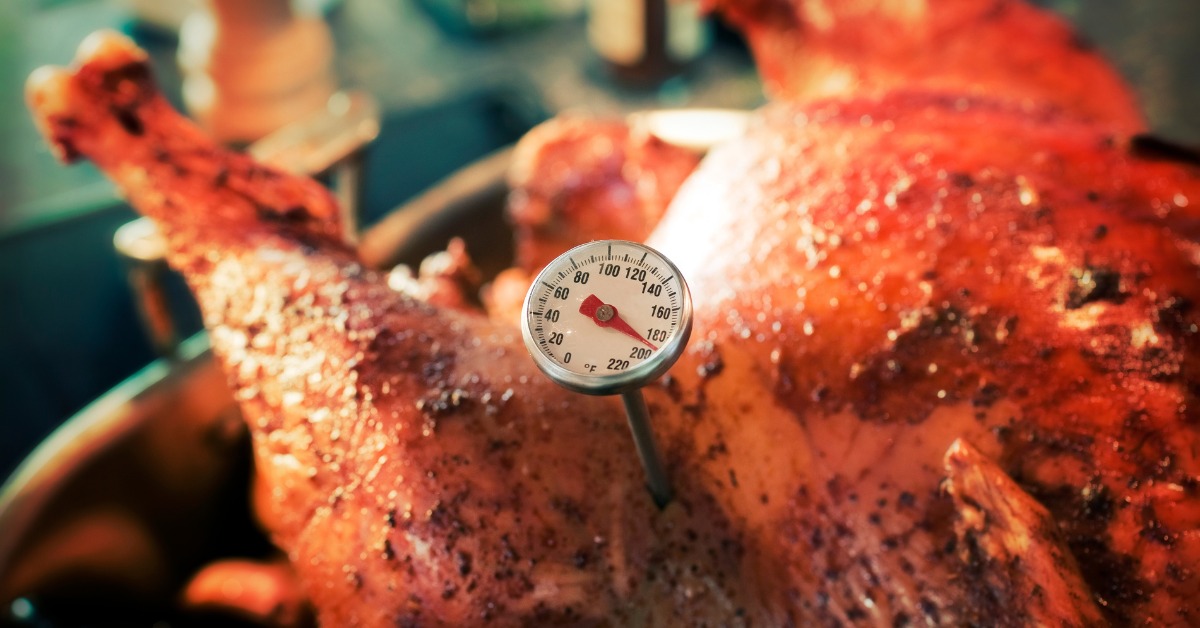
For the wing reading, work near its attachment to the body and aim toward the meat at the base of the wing. Do not measure the thin wingtip or rest the probe against the joint. CDC’s placement guide identifies this spot as where the body and wing meet, with the thermometer aimed toward the wing.
This area is smaller, so reposition carefully if you keep meeting bone. A slim sensing tip makes placement easier, provided you follow the thermometer’s required insertion depth. Check the corresponding area on the other side too.
How Far Should the Probe Go In?
There is no single insertion depth for every turkey and thermometer. Meat thickness and the probe’s sensing length both matter. Aim to keep the whole sensing area inside the meat.
Some digital thermometers read close to the tip, whereas many dial thermometers sense along a longer section of the stem. USDA explains these differences in its food thermometer guide. Check your model’s instructions or insertion mark rather than assuming that every probe needs only its point inside the meat.
During cooking, leave a thermometer in the oven or smoker only if the probe and exposed cable are rated for it. A handheld instant-read model is not automatically oven-safe, so check its instructions.
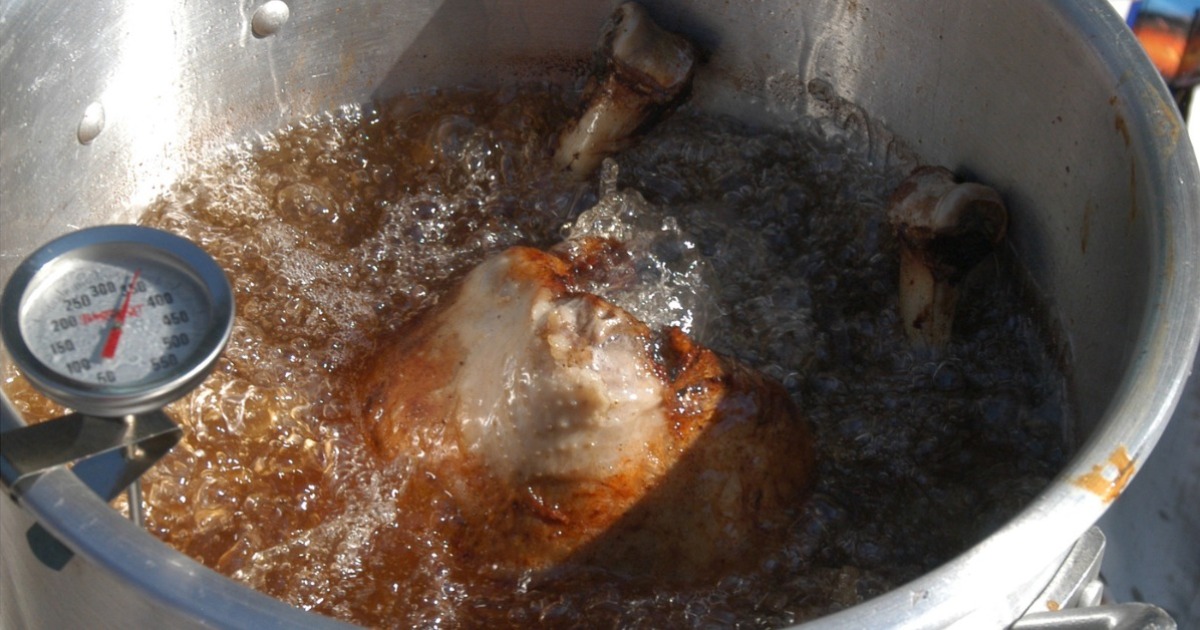
A leave-in probe tracks one spot, so check the other required locations when its alarm sounds. For deep-fried turkey, follow the fryer’s safe removal procedure and take readings on a stable tray. The oil thermometer cannot tell you the meat’s temperature.
What If the Breast Is Done but the Thigh Is Not?
First, check your placement again. A probe against bone, sitting in the cavity, or not inserted far enough may not represent the meat you intended to measure. Retest in the thick meat, allow the reading to settle, and compare nearby spots.
If a correctly measured area is still below 165°F, continue cooking and check again. For example, a breast reading of 167°F does not cancel out a thigh reading of 158°F. Do not average the numbers or choose the highest one; each required location needs to meet the minimum.
You may see recipes that cook dark meat to a higher temperature for texture. That is a separate cooking preference, not a different USDA safety minimum for the breast and thigh. This chart keeps the basic home-cooking check consistent: at least 165°F in all the required places.
Can You Rely on Resting, Pink Color, or a Pop-Up Timer?
A turkey’s temperature can keep rising off the heat, which is known as carryover cooking. For this chart, follow USDA’s straightforward guidance and confirm 165°F before removing the bird. Do not count on a fixed rise during resting to finish an underdone spot.
Once it is safely cooked, USDA recommends letting a roasted whole turkey stand for about 20 minutes before carving. That rest helps the juices settle; it does not replace checking the temperature first.
Color is not a reliable substitute either. USDA notes that turkey can remain pink after reaching a safe temperature. At the same time, white-looking meat or clear juices cannot prove that every part is ready. A food thermometer gives you the information those visual clues cannot.
If your turkey has a pop-up indicator, still check the breast, thigh, and wing with a food thermometer. And if you roasted it with stuffing, measure the center of the stuffing separately. CDC recommends cooking stuffing in a separate dish because it is easier to confirm that it reaches 165°F.
Conclusion
Once the breast, inner thigh, and inner wing reach at least 165°F, you can stop guessing. Check both sides and any stuffing, then let the bird rest. A few careful readings tell you more than another look at the skin.
By, Sean O'ConnorSean O'Connor is the lead writer at Batter Blaster, where he combines a lifelong passion for food with sharp research skills to bring readers the best in cooking tips, kitchen gear guides, and food insights. With a background in culinary journalism and a love for simplifying home cooking, Peter focuses on practical, approachable advice that helps real people cook with confidence.