What Size Turkey Fryer Do You Need?
 Sean O'Connor
- 22 Oct 2026 09:22
- 4
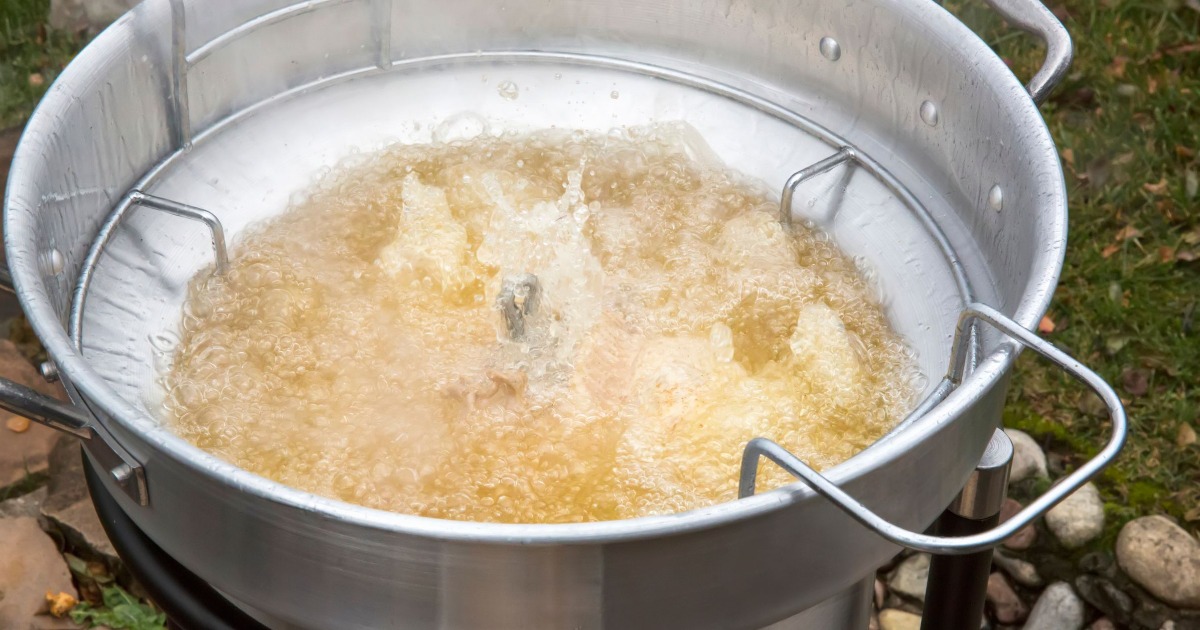
A 30-quart turkey fryer sounds big. But is it big enough for your turkey?
That's where fryer sizing gets confusing. Quarts tell you how much the pot holds, not automatically how big a bird you can safely fry in it. A wider pot may accommodate a turkey differently from a tall, narrow one, even when both have the same capacity.
So instead of starting with the biggest pot you can find, start with the turkey you normally cook.
Start With Turkey Weight, Then Look at Quarts
If you already know roughly how large your Thanksgiving turkey usually is, you're halfway there.
For many households, a fryer around 30 quarts falls into the useful middle ground. For example, Bayou Classic rates its 30-quart turkey fryer for birds up to 18 pounds. Its larger 42-quart Grand Gobbler is rated for turkeys up to 25 pounds.
That gives us a useful starting point:
| Turkey You Usually Cook | Where to Start Looking |
| Smaller turkey, around 10–12 lb | Smaller or standard fryer rated for that bird |
| Average turkey, around 12–16 lb | Around 30 qt is a common starting point |
| Larger turkey, around 16–18 lb | 30+ qt, with an appropriate manufacturer weight rating |
| Turkey around 20 lb | Look beyond standard 30-qt models |
| Very large turkey, 20–25 lb | Larger models around 40+ qt may be appropriate |
Notice that the table doesn't say “a 14-pound turkey requires exactly X quarts.”
That's intentional.
There isn't a reliable universal quarts-per-pound formula for turkey fryers. Use the quart number to narrow your search, then use the manufacturer's maximum turkey weight to make the final call.
Why 30 Quarts Is Such a Common Turkey Fryer Size
Spend a few minutes shopping for turkey fryers and you'll see 30 quarts everywhere.
There's a practical reason for that.
It's large enough to accommodate many of the turkeys people actually buy for Thanksgiving without turning the fryer into an enormous piece of equipment that's awkward to store for the other 364 days of the year.
Bayou Classic, for example, rates its 30-quart aluminum turkey fryer for birds up to 18 pounds.
So if your Thanksgiving turkey normally lands somewhere around 12 to 16 pounds, a 30-quart model is a logical place to begin your search.
But “30 quarts” still isn't the approval you're looking for. If one model says its maximum turkey weight is 16 pounds and another says 18, respect those limits even though the pots may advertise similar capacities.
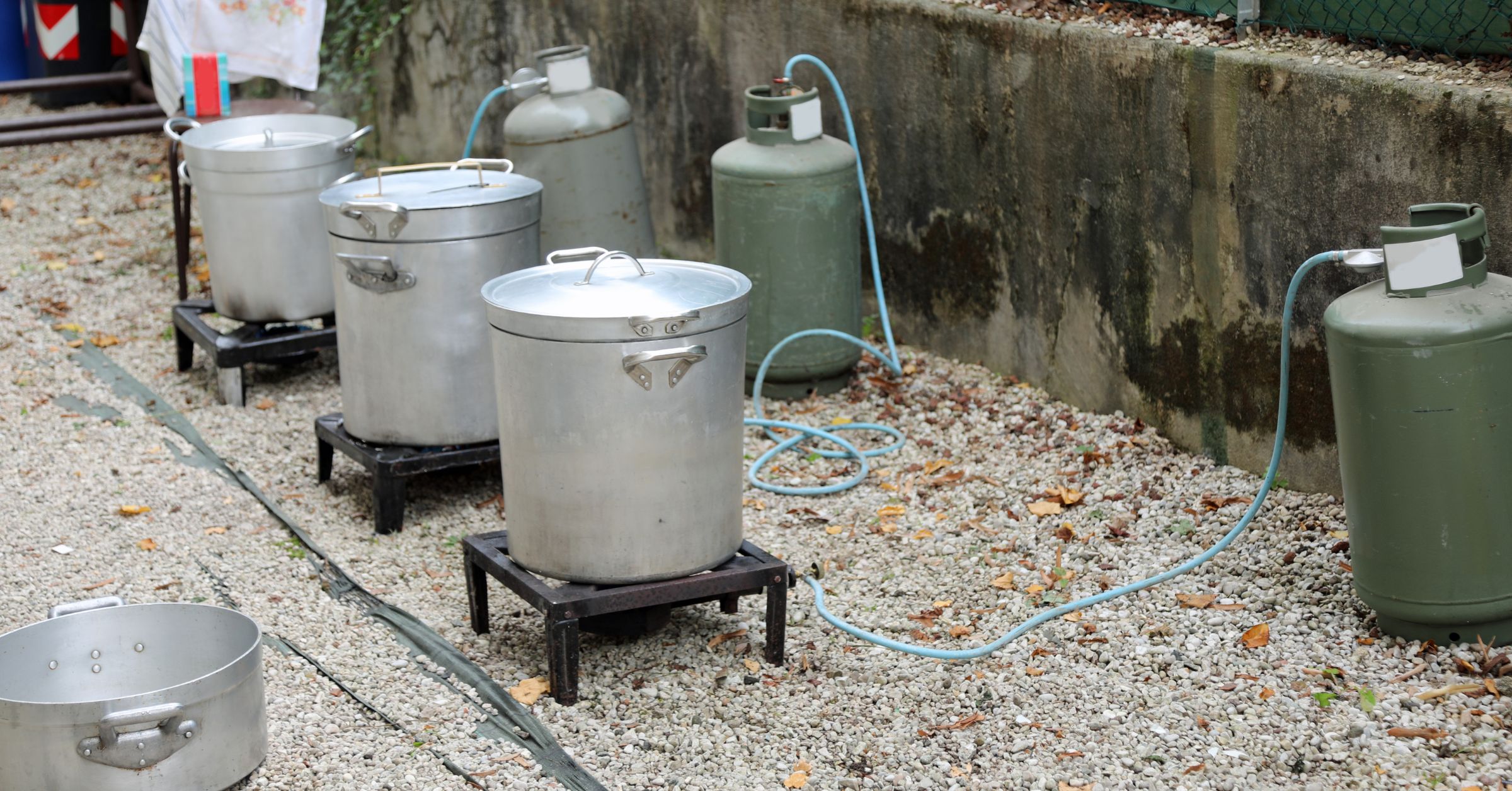
Cooking a 20-Pound Turkey? Size Up Carefully
A 20-pound turkey changes the conversation.
At that point, you're beyond the rating of some standard 30-quart fryers. Trying to solve the problem by squeezing the bird into the pot isn't a good idea.
Remember, the turkey isn't the only thing going inside.
You also need room for the oil it displaces.
A bird that technically fits into an empty pot may push the oil dangerously high once it's lowered in. Overflowing oil can reach the burner below and ignite.
For a turkey around 20 pounds, look specifically for a fryer rated to handle a bird of that weight or larger. Larger models in the 40-quart range are one place to look. Bayou Classic's 42-quart Grand Gobbler, for example, is rated for turkeys up to 25 pounds.
The key isn't reaching a particular quart number. It's finding a model whose stated capacity actually covers your bird.
The Turkey Should Fit. The Oil Should Fit Too.
This is the part that's easy to miss when comparing fryer sizes online.
You're not shopping for a pot that can simply swallow a raw turkey.
You're shopping for enough space to hold: turkey + cooking oil + safe clearance
When the turkey enters the oil, it displaces some of that oil and raises the level in the pot. The larger the bird, the more important that becomes.
That's why turkey fryer pots have maximum-fill guidance and why you shouldn't fill one based on guesswork.
A little extra capacity is useful here. If your turkey sits right at the fryer's maximum approved weight every year, moving to an appropriately rated larger model may give you a setup that better suits how you actually cook.
Two 30-Quart Fryers Aren't Necessarily the Same Size Where It Matters
Here's another reason quart numbers can fool you.
Capacity measures volume. Turkeys have shape.
A tall, narrow 30-quart pot and a wider 30-quart pot may hold the same amount of liquid, but that doesn't mean the same turkey will sit comfortably inside both.
The basket or poultry rack also takes up space.
This is why comparing turkey fryers purely by quarts is a little like buying a suitcase based only on liters. The number is useful, but dimensions and design tell you whether the thing you're actually packing will fit.
When you're comparing two similar-capacity fryers, check:
- Maximum turkey weight
- Pot diameter and height
- Basket or poultry-rack design
- Maximum oil level
- Required clearance
- Manufacturer cooking instructions
The first item on that list should carry more weight than a small difference in quarts.
Bigger Isn't Automatically Better
It can be tempting to solve the whole sizing problem by buying a huge fryer.
If 30 quarts works, 50 must be better, right?
Not necessarily.
A larger fryer means a larger piece of equipment to move, clean, and store. Depending on the pot and what you're cooking, it can also mean dealing with more oil than you actually need.
If you normally cook a 12-pound turkey, buying a fryer designed around enormous birds may give you capacity you'll rarely use.
On the other hand, buying right at the edge of your needs isn't ideal either.
A better target is comfortably large enough for the turkeys you normally cook, rather than either the smallest pot you can get away with or the biggest one you can find.
What If Your Turkey Size Changes Every Year?
Then shop around the upper end of your normal range.
Say you usually buy turkeys between 12 and 16 pounds. Instead of choosing a fryer that tops out at 12 or 14 pounds, choose one rated comfortably for the larger birds you sometimes bring home.
That gives you flexibility without jumping straight to an oversized commercial-looking setup.
But if you unexpectedly come home one year with a turkey heavier than the fryer's limit, don't assume you can make it work.
Use a different cooking method or a properly sized fryer.
The fryer's weight limit should change the cooking plan, not the other way around.
Electric Turkey Fryers Play by Different Rules
If you're considering an electric turkey fryer, stop comparing it directly with 30- and 40-quart propane pots.
Manufacturers may describe electric fryers by the maximum turkey they can cook rather than expecting you to choose based primarily on pot capacity.
For example, Masterbuilt's XL electric fryer instructions accommodate a turkey in the 16- to 18-pound range. That's the number you care about.
The same approach works regardless of fryer style: Find your usual turkey weight → find fryers approved for that weight → compare the remaining features.
It makes much more sense than trying to convert an electric fryer's capacity into an equivalent propane-fryer quart size.

Planning to Cook More Than Turkey?
Here's one situation where going larger can make sense even if your Thanksgiving bird doesn't require it.
A turkey fryer can potentially become a useful outdoor stockpot for seafood boils, corn, crawfish, and other large-batch cooking, provided the manufacturer approves those uses.
Suddenly, the question changes.
A 30-quart pot might comfortably handle your 14-pound turkey but feel limiting when you're trying to fit potatoes, sausage, corn, and seafood for a backyard crowd.
If you know the cooker will get used throughout the year, consider both your turkey and the largest batch of food you're likely to make.
Extra capacity is much easier to justify when you're actually going to use it.
A Simpler Way to Choose
If all the numbers are starting to blur together, forget about quarts for a moment.
Ask yourself three questions:
1. What's the biggest turkey I normally buy?
Use that weight as your minimum requirement.
2. What does the fryer manufacturer say it can handle?
Your turkey should fall within the model's stated weight limit.
3. Will I use the pot for anything else?
If seafood boils or other large-batch meals are part of the plan, additional capacity may be worthwhile.
Only after answering those questions do you really need to compare 30 versus 32 versus 42 quarts.
That turns the quart number into what it should be: a comparison tool, not the entire buying decision.
The Bottom Line
For many average Thanksgiving turkeys, a fryer around 30 quarts is a sensible place to start. Larger birds, particularly those approaching or exceeding 20 pounds, may require a substantially larger model.
But don't buy a turkey fryer by quart size alone.
Start with the bird you actually cook, find a fryer rated to handle it safely, and then decide how much extra capacity is useful. After all, you're buying a fryer for a turkey, not a turkey for your fryer.
By, Sean O'ConnorSean O'Connor is the lead writer at Batter Blaster, where he combines a lifelong passion for food with sharp research skills to bring readers the best in cooking tips, kitchen gear guides, and food insights. With a background in culinary journalism and a love for simplifying home cooking, Peter focuses on practical, approachable advice that helps real people cook with confidence.