Food Storage Container Size Guide
 Sean O'Connor
- 16 Oct 2026 09:31
- 7
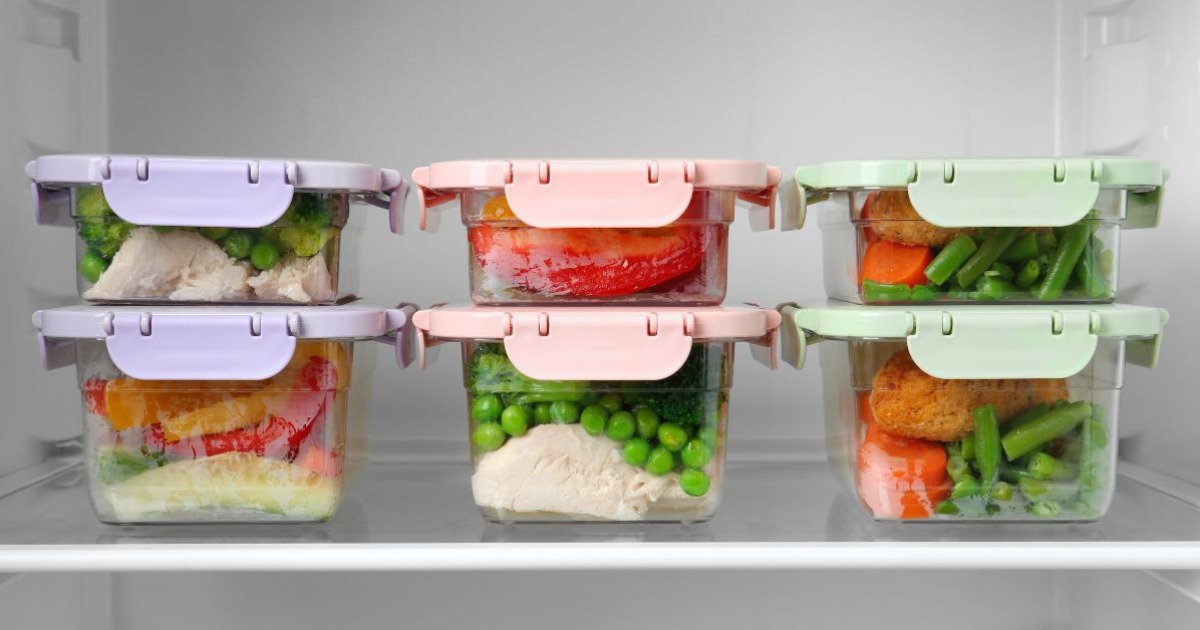
Buying food storage containers should be simple, until you’re staring at a shelf full of 16-ounce, 3-cup, and 2-liter options with no real idea how much food each one holds.
The numbers make more sense when you connect them to actual food. A small container may be just right for dressing or snacks, while leftovers and meal-prep lunches need more room. And if you’re storing cereal, flour, or a big batch of soup, you’ll need to size up considerably.
This guide breaks down common food storage container sizes and what they’re actually useful for, so you can choose based on what you store rather than guessing from the label.
Food Storage Container Sizes at a Glance
Container dimensions vary by brand and shape, so capacity is usually the easiest way to compare them.
| Container Capacity | Approx. Equivalent | Good For |
| ½–1 cup | 4–8 fl oz | Sauces, dips, dressings, toppings |
| 1–2 cups | 8–16 fl oz | Snacks, fruit, small leftovers |
| 2–3 cups | 16–24 fl oz | Side dishes, soup, individual portions |
| 3–4 cups | 24–32 fl oz | Lunches, meal-prep portions, larger leftovers |
| 5–8 cups | 40–64 fl oz | Family leftovers, casseroles, large salads |
| 9–12 cups | 72–96 fl oz | Batch cooking, soups, large quantities of food |
| 12+ cups | 3+ qt | Bulk food, large batches, pantry storage |
These aren't strict rules. A bulky salad and a dense serving of chili can require very different containers even if both count as one meal.
The table is better used as a starting point than as a formula.
What Size Container Do You Need for Leftovers?
For everyday leftovers, 2- to 4-cup containers are some of the most useful sizes to have around.
A smaller 2-cup container works well when you have one portion of pasta, vegetables, rice, or another side left after dinner. Move toward 3 or 4 cups when you want enough space for a more complete meal.
Larger containers become useful when you're storing food for several people rather than separating it into individual servings.
For example, instead of squeezing the remaining casserole into several small containers, a 6- or 8-cup container may keep everything together.
There is an advantage to going smaller, though: portioning leftovers before refrigerating them makes tomorrow's meal easier. You can grab one container rather than repeatedly opening and serving from a larger one.
What Size Is Best for Meal Prep?
There isn't one ideal meal-prep container size because meals take up space differently.
Still, roughly 24 to 32 ounces (3 to 4 cups) is a useful range for many individual meals.
That gives you enough room for combinations such as rice with chicken and vegetables, pasta with a side, or a grain bowl without automatically requiring an oversized container.
For lighter meals or snacks, 16 ounces may be plenty. Larger meals may need 32 ounces or more.
But capacity isn't the only thing that matters here.
A wide, shallow container can be more practical for a meal with several components, while a deeper container may work better for foods such as soup or chili.
So two containers labeled 32 oz can feel surprisingly different once you start filling them.
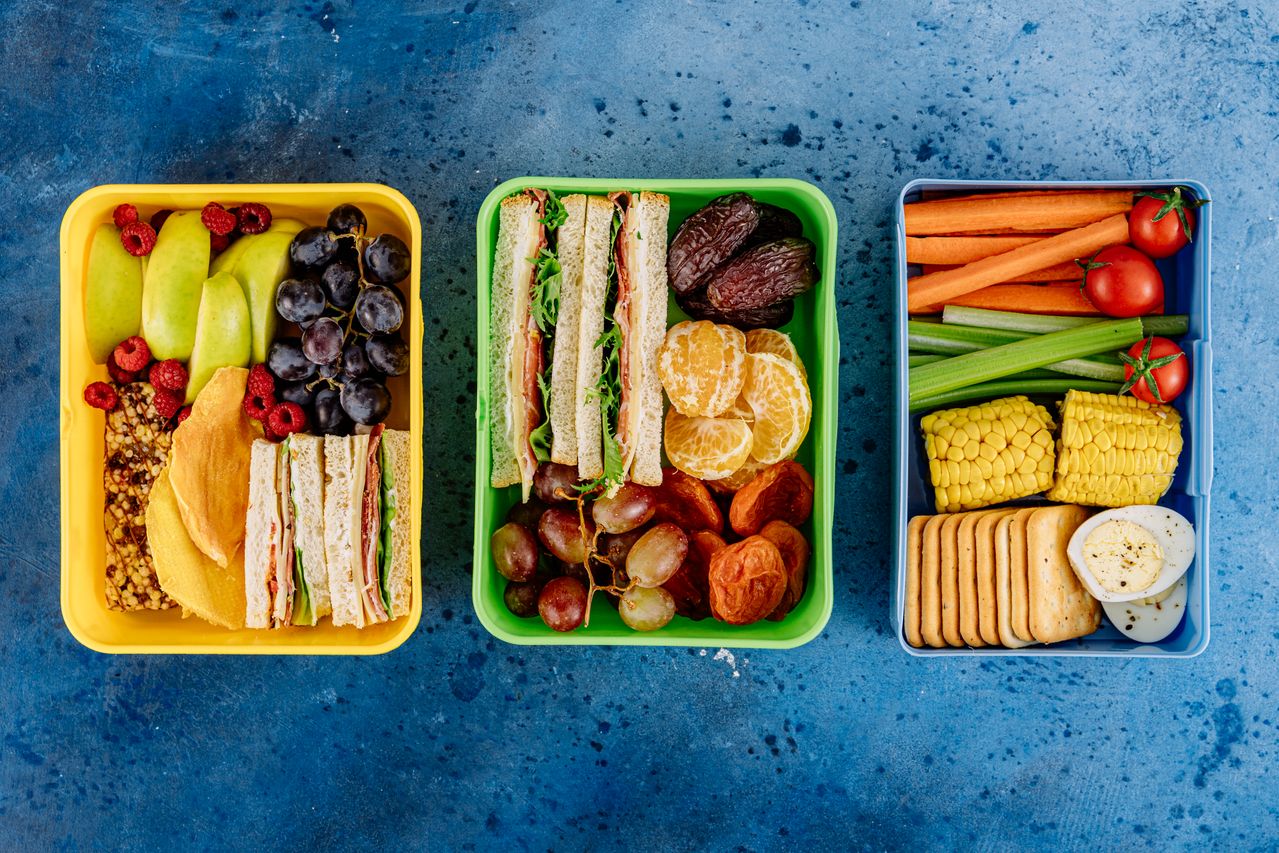
Small Containers: When 1–2 Cups Is Enough
Tiny containers tend to be more useful than they look.
Sizes around ½ to 1 cup are handy for foods you only need in small quantities: salad dressing, hummus, chopped herbs, nuts, sauces, or toppings.
Move up to 1 or 2 cups, and you have enough room for snacks, cut fruit, yogurt, or small portions of leftovers.
They're also useful inside a larger packed lunch. Instead of putting sauce directly over food and ending up with a soggy meal hours later, you can keep it separate until you're ready to eat.
The limitation is obvious: once you move into full-meal territory, these sizes fill up quickly.
Medium Containers: The Everyday Workhorses
If you don't want a cabinet full of every possible size, medium containers are usually the ones worth having more of.
Containers around 2 to 4 cups can handle:
- Individual leftovers
- Meal-prep lunches
- Cooked grains
- Chopped vegetables
- Soup or chili
- Fruit
- Small batches of baked goods
They're big enough to be flexible without taking up the refrigerator space of a large family-size container.
This range also makes portioning easier. Instead of opening a giant container every time someone wants leftovers, meals can be divided while you're cleaning up.
Large Containers: Better for Batches and Family Meals
Once you get above roughly 5 or 6 cups, you're moving away from individual portions and toward shared food.
These containers make more sense for a large batch of soup, several servings of pasta, salad for the family, leftover casserole, or food you've prepared in advance.
Sizes around 8 to 12 cups can also be useful when you want to store one recipe together rather than splitting it across multiple containers.
Just remember that bigger isn't automatically better.
A huge container with a small amount of food takes up unnecessary refrigerator space. And when you're freezing food, dividing a large batch into smaller portions can make it much easier to thaw only what you need later.
What Size Containers Work for Pantry Storage?
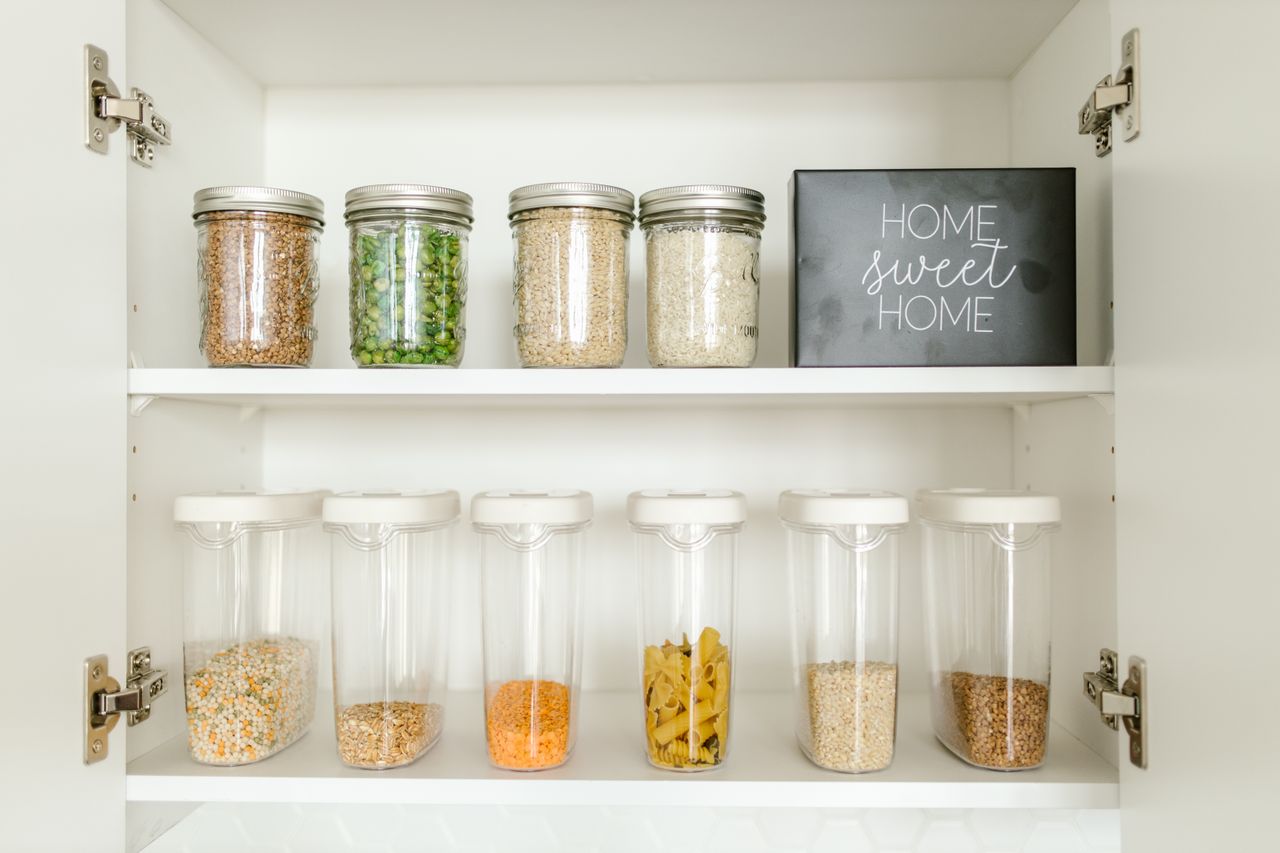
Pantry storage is a little different because you're often trying to fit an entire package into one container.
For small ingredients such as nuts, seeds, dried fruit, or baking additions, a few cups may be enough.
Rice, oats, cereal, pasta, flour, and sugar usually need considerably more room.
This is where package weight can be misleading.
A pound of one food doesn't necessarily occupy the same amount of space as a pound of another. Pasta, for example, can leave lots of empty space between pieces, while sugar packs much more densely.
If your goal is to empty a whole package into a container, don't choose capacity based on weight alone. Check the volume of the product you're buying and leave a little room at the top so the container is easy to scoop from and close.
Cups, Ounces, Quarts, and Liters: How Do They Compare?
This is where shopping for containers can get unnecessarily confusing.
In U.S. volume measurements:
| Measurement | Equivalent |
| 1 cup | 8 fl oz |
| 2 cups | 16 fl oz / 1 pint |
| 4 cups | 32 fl oz / 1 quart |
| 8 cups | 64 fl oz / 2 quarts |
| 16 cups | 128 fl oz / 1 gallon |
For metric sizes, 1 liter is about 4.23 U.S. cups, while 1 U.S. quart is about 0.95 liter.
One important distinction: when a container says 16 fl oz, that's a measurement of volume. It doesn't mean the container can hold 16 ounces by weight of every type of food.
That difference becomes especially important when choosing containers for pantry ingredients.
Don't Choose by Capacity Alone
Capacity tells you how much fits inside. It doesn't tell you whether the container will actually work well for the food.
Shape matters too.
Wide, shallow containers give you more surface area and are useful for full meals, baked foods, and items you don't want piled deeply.
Tall containers use less shelf space and can work well for soups, sauces, grains, and dry pantry staples.
Rectangular containers often make efficient use of refrigerator shelves because they can sit closely together. Round containers can be convenient for stirring and liquids but may leave more unused space between containers.
Then there's the lid. A container that technically has the perfect capacity isn't particularly useful if it leaks every time you put soup in your work bag.
So think of the printed capacity as the first filter, not the final decision.
How Many Sizes Do You Actually Need?
You probably don't need a different container for every half-cup increase in capacity.
For most kitchens, a mix of small, medium, and large sizes gives you more flexibility than owning a huge collection of nearly identical containers.
Small containers handle sauces and snacks. Medium sizes take care of most individual meals and leftovers. A few larger containers cover family portions, batch cooking, and bulky foods.
If you're building a set from scratch, pay attention to which size you reach for repeatedly. That's usually a better clue about what you need more of than buying the largest assortment available.
The Bottom Line
There's no single “best” food storage container size. Small containers work for extras, medium ones cover most everyday meals, and larger sizes earn their space when you're storing food in batches.
Start with what you're actually putting inside, then choose the capacity and shape to match. It's a much easier approach than trying to guess what “24 oz” will look like once dinner is in it.
By, Sean O'ConnorSean O'Connor is the lead writer at Batter Blaster, where he combines a lifelong passion for food with sharp research skills to bring readers the best in cooking tips, kitchen gear guides, and food insights. With a background in culinary journalism and a love for simplifying home cooking, Peter focuses on practical, approachable advice that helps real people cook with confidence.